
Meet Rhythms of Grace in Dallas Center, Iowa
Rhythms of Grace is a volunteer-driven nonprofit offering equine-assisted services for children and adults with disabilities and special needs in Dallas Center, Iowa, near Des Moines. Your support can help sustain access to these programs and the preparation, people, and place behind them.
The horses may be what first brings you here. We’d love to introduce you to the people and care behind them, too. Before a participant arrives, there’s a horse to prepare, equipment to check, and a team getting ready to welcome them.
Our work brings together horses, trained volunteers, instructors, and licensed professionals. Each person has a role, and each service is shaped around the people participating.
This September, we’re making time to introduce our horses, thank their sponsors, and share a closer look at our programs. Whether you’ve been part of Rhythms of Grace for years or are just finding us, we’re glad you’re here.
What are equine-assisted services?
Equine-assisted services involve horses in learning, horsemanship, or therapy. Our programs include horsemanship and adaptive riding, mental health therapy and learning, and occupational therapy. Each program has its own focus and is shaped around the people taking part.
In adaptive riding and horsemanship, participants learn riding and horse-related skills through lessons adapted to their needs. Our therapy services are provided by licensed professionals within their scope of practice, while adaptive riding lessons focus on riding and horsemanship skills.
For a donor, the connection is practical. An adapted lesson needs preparation, equipment, and people who understand their roles. A family may need help with participation costs. Financial support helps sustain the organization behind those needs, so the story extends beyond the horse in the photograph to the person coming for a session.
Horsemanship and adaptive riding
Adaptive riding focuses on learning to ride and work with horses, with instruction adapted to the participant. You may also hear it called therapeutic riding. PATH International’s explanation of adaptive and therapeutic riding describes why both terms are used. A helpful question is what the person is learning and who is leading the service: a riding lesson and a licensed therapy appointment have different purposes, even when both involve horses.
For a donor, that distinction makes the work easier to understand. A photo of someone in a saddle tells only part of the story. Knowing the service, the instructor’s role, and the participant’s goals gives you a fuller picture of what the program is designed to provide.
Mental health therapy and learning
Therapy and learning are also distinct. Psychotherapy incorporating horses is delivered by a licensed mental health professional. Equine-assisted learning uses activities with horses to support learning goals, such as communication or teamwork. Utah State University Extension’s guide to equine-assisted services explains these differences and the professional roles involved.
At Rhythms of Grace, mental health therapy and learning are listed among our services. Our team can explain the specific offering, who provides it, and how it fits within the broader work. That conversation matters whether you are exploring a program for your family or considering a gift to support the organization.
Occupational therapy
Occupational therapy at Rhythms of Grace is provided by licensed professionals. The horse’s movement or environment may be incorporated into an individualized plan of care. The therapist guides the treatment; the presence of a horse alone does not make an activity occupational therapy.
You can explore our current program information to learn more about these service categories. If a term is unfamiliar, please ask. We want supporters to understand the work clearly enough to explain it to someone else.
A session begins before the participant arrives
Before a participant arrives, the team prepares the horse and equipment. Instructors and therapists plan for the person they will be working with. Volunteers learn their assigned roles through training.
Depending on the session and the participant’s needs, a volunteer team may include someone leading the horse and sidewalkers providing support alongside the rider. Other volunteers contribute through grooming, barn care, welcoming families, and helping with events.
To the volunteers who make time to learn, prepare, and show up week after week: thank you. We’re grateful for the care you bring to your role.
What should supporters look for in an equine-assisted program?
A thoughtful introduction should help you understand the people, preparation, and care behind the experience. Utah State University Extension encourages families to ask about provider qualifications, safety practices, and horse welfare when considering a program. Those are useful topics for donor conversations, too.
Ask who is responsible for each service, how volunteers prepare for their roles, and how the team considers a horse’s suitability for the work. Ask what the program hopes to accomplish and how that purpose is explained to participants and families. You don’t need an equestrian background to ask clear questions.
At Rhythms of Grace, we welcome the chance to introduce you to the work behind the photographs. The people receiving services deserve care and privacy, so learning about the mission should never depend on a participant sharing personal information publicly. Program explanations and approved stories can help you understand the organization while respecting the people it serves.
Meet our horses and their sponsors
Our horses are trusted partners in healing, learning, and personal growth. Each one brings a unique personality, history, and special gifts to our programs, whether that’s offering comfort, helping a rider build confidence and independence, or simply providing a calm presence. They also need daily care, including on days without scheduled sessions.
At this year’s gala, supporters sponsored every horse partner, making 2026 the first year all of our horses have been fully funded. This month’s introductions will pair each horse with its sponsor: Amigo, Boots, Buttercup, Crystal, Daisy Mae, Diego, Doc, Moses, Peanut, Pepsi, and Dallas, the newest member of the herd. We’ll also ask sponsors what brought them to Rhythms of Grace and why they chose to give.
To our horse sponsors: thank you for caring for the horses who are such an important part of Rhythms of Grace. Your support helps make their daily care possible.
How do donations support Rhythms of Grace?
Donor support helps protect access to equine-assisted services and sustain the people, horses, and place behind them. Rider scholarships can help families participate when cost is a barrier. Program support contributes to professional services, volunteer preparation, equipment, and everyday operations. Facility support helps maintain a welcoming, accessible setting.
If your business is considering a contribution, start with the purpose that matters to your team. You might be interested in rider access, program delivery, or a facility project. We can connect that interest with a current need and agree on the contribution, appropriate employee involvement, and the updates you will receive.
You don’t need to own a horse or know how to ride to be part of this community. A gift that fits your budget can help sustain the organization behind these services. If you have a particular interest, such as rider scholarships, ask our team about the current need and how to direct your support.
What can a gift help make possible?
A horse’s story can be the first connection. The next question is what your gift can help make possible for the people who come here. Supporting a rider scholarship, the preparation behind a session, or the place where programs happen gives that connection a clear purpose. Each need is part of the same mission, even when the gift supports a different part of the work.
Our horse partners received annual care sponsorship through the gala. We’re grateful for that milestone, and we want new supporters to understand what remains to be funded. Ask about current rider scholarships, program and operating needs, or future horse sponsorship. Our team can explain the purpose and any restrictions before you give.
A monthly contribution helps us plan for recurring program and operating needs. You choose an amount that fits your circumstances, and that support continues beyond a single event. If you already give, thank you for helping sustain this work. If you prefer to support a particular purpose, our team can explain the available options before you make a designated gift.
Where is Rhythms of Grace located?
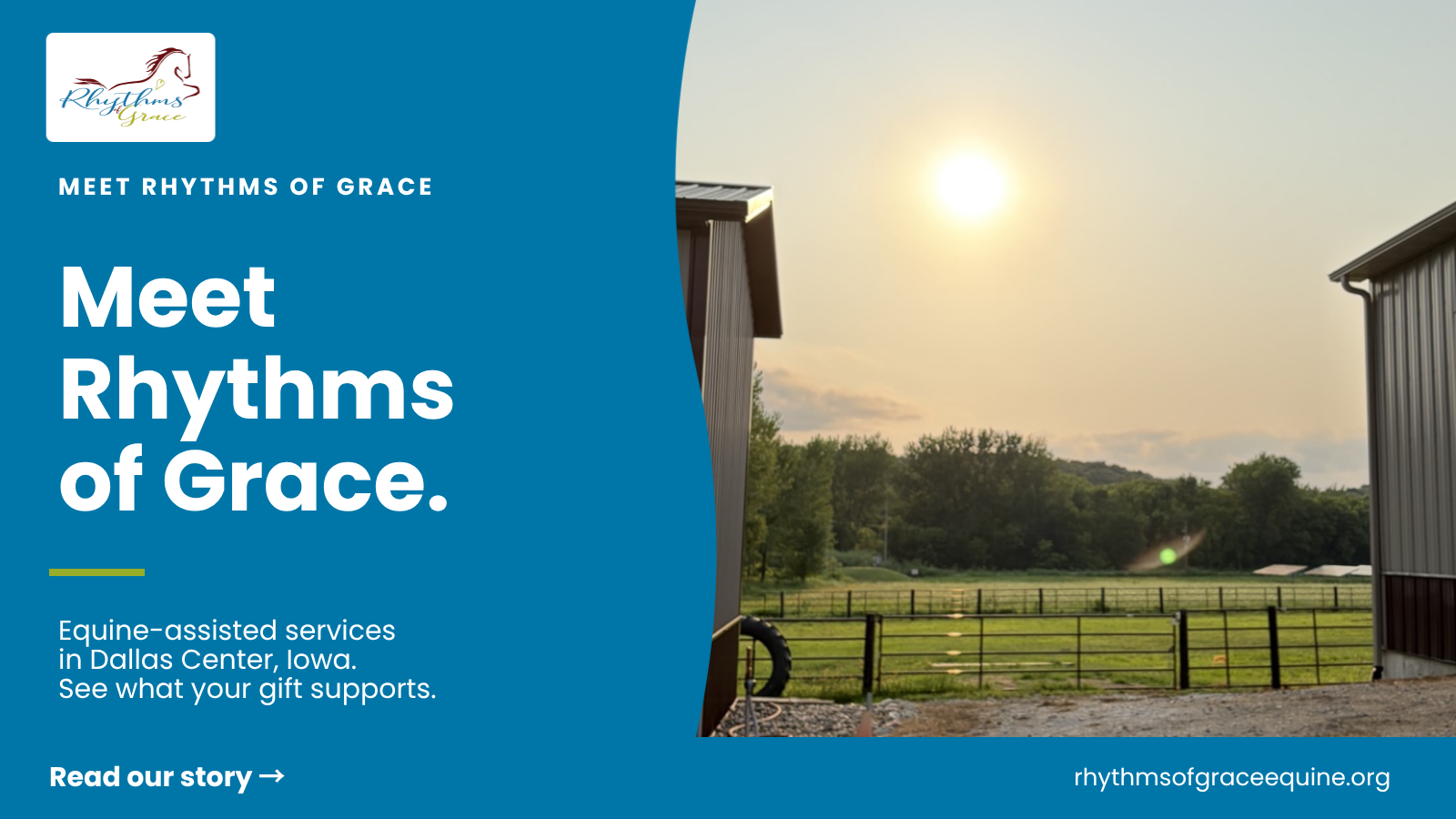
We make our home at River Heights Ranch in Dallas Center, west of Des Moines. Visits should be arranged with our team so we can respect program schedules and participant privacy.
The horses may have brought you to this story. We hope the people and preparation give you a reason to stay connected. Help sustain Rhythms of Grace with a gift toward our programs and everyday operating needs. Visit rhythmsofgraceequine.org and choose Donate; select Monthly on the form if ongoing giving fits your budget.
